

Microbiomes for global research: Leibniz Institute DSMZ expands its product range
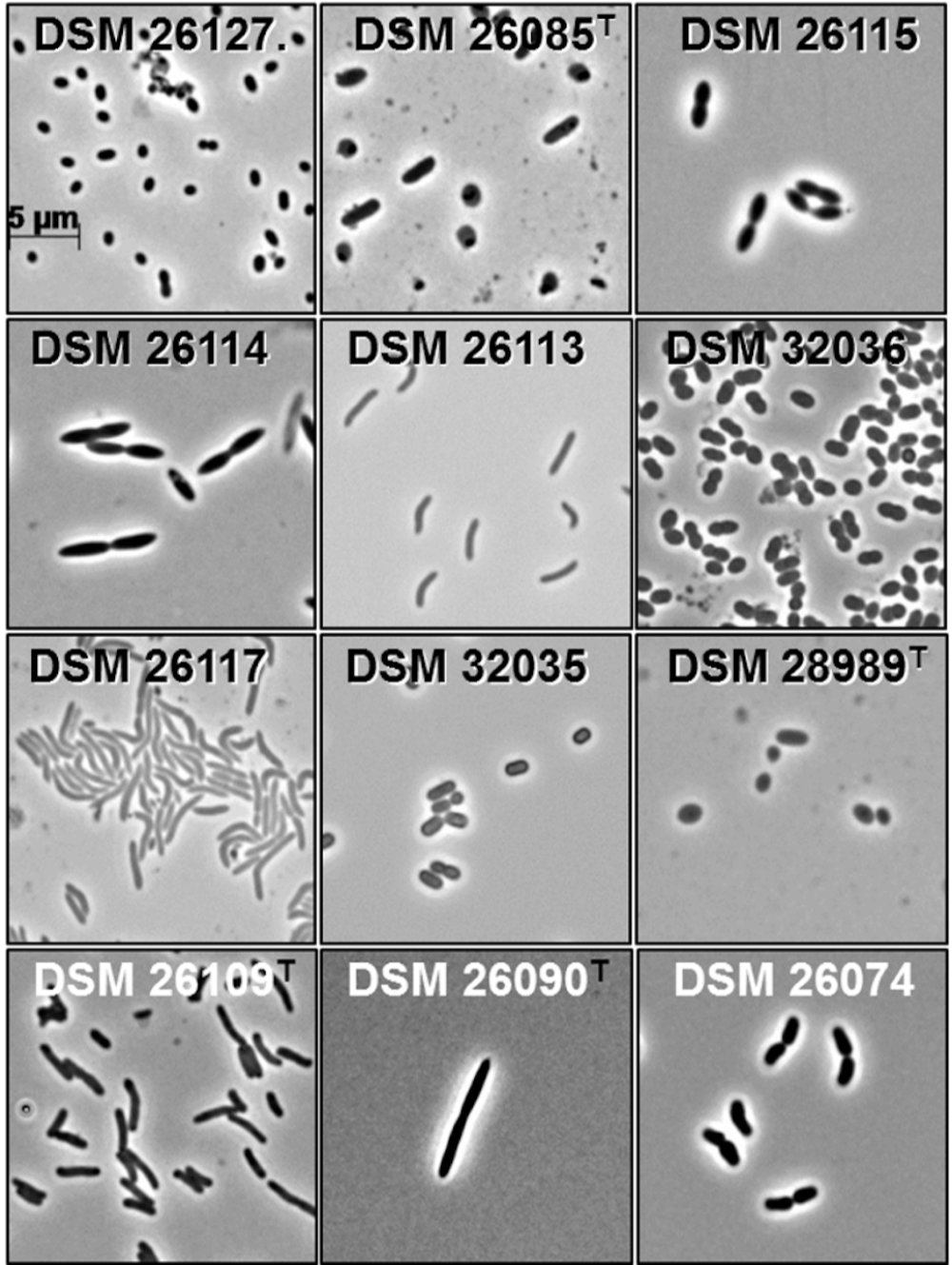
Light microscope images of bacteria from the mouse gut microbiome, source DSMZ
Defined microbial communities from three microbiomes now available
BRAUNSCHWEIG, GERMANY, April 27, 2026 /EINPresswire.com/ -- The Leibniz Institute DSMZ-German Collection of Microorganisms and Cell Cultures GmbH in Braunschweig, Germany has expanded its portfolio to include representative communities from various microbiomes. These are now available to researchers worldwide via the institute’s website.
Microbiomes from mice, maize and sweet grass
Of particular note are three defined microbial communities from the microbiomes of mice, maize and a sweet grass. They comprise a selection of bacteria from the respective microbiome, which can now be purchased as a set, thereby enabling comparative studies. Previously, bacteria from a single microbiome were only available as individual products. In addition to these selected communities, the Leibniz Institute DSMZ also offers a wide range of corresponding representatives from other microbiomes as individual products, for example from the human gut, pigs and chickens, as well as the plant species Arabidopsis thaliana (also known as thale cress). These bioresources can also be used by researchers worldwide for their experiments. All information on the available microbiomes is now available on the Leibniz Institute DSMZ website at www.dsmz.de/collection/catalogue/microorganisms/microbiota.
Trends in microbiome research
A microbiome refers to the totality of microorganisms (primarily bacteria) living in a habitat – for example, on specific areas of our body – as well as their genomes, metabolic products and functional interaction with the host or the environment. Research into microbiomes and the microbiota (the totality of microorganisms) living within them has increased significantly in recent years, mainly caused by the impact on health by the interaction between, for example, humans and their gut or skin microbiome. This applies not only to humans and animals, but also to plants. Therefore, studying and understanding microbiomes is key to developing new approaches to prevention and treatment for humans, animals and plants.
Press contact
PhDr. Sven-David Müller, Head of Public Relations, Leibniz Institute DSMZ-German Collection of Microorganisms and Cell Cultures GmbH
Phone: ++49 (0)531/2616-300
Mail: press@dsmz.de
About the Leibniz Institute DSMZ
The Leibniz Institute DSMZ-German Collection of Microorganisms and Cell Cultures is the world's most diverse collection of biological resources (bacteria, archaea, protists, yeasts, fungi, bacteriophages, plant viruses, genomic bacterial DNA as well as human and animal cell lines). Microorganisms and cell cultures are collected, investigated and archived at the DSMZ. As an institution of the Leibniz Association, the DSMZ with its extensive scientific services and biological resources has been a global partner for research, science and industry since 1969. The DSMZ was the first registered collection in Europe (Regulation (EU) No. 511/2014) and is certified according to the quality standard ISO 9001:2015. As a patent depository, it offers the only possibility in Germany to deposit biological material in accordance with the requirements of the Budapest Treaty. In addition to scientific services, research is the second pillar of the DSMZ. The institute, located on the Science Campus Braunschweig-Süd, accommodates more than 93,600 bioresources and has around 210 employees. www.dsmz.de
The Leibniz Association
The Leibniz Association connects 96 independent research institutions that range in focus from natural, engineering and environmental sciences to economics, spatial and social sciences and the humanities. Leibniz Institutes address issues of social, economic and ecological relevance. They conduct basic and applied research, including in the interdisciplinary Leibniz Research Alliances, maintain scientific infrastructure, and provide research-based services. The Leibniz Association identifies focus areas for knowledge transfer, particularly with the Leibniz research museums. It advises and informs policymakers, science, industry and the general public. Furthermore, a special focus is placed on technologically relevant research and active technology transfer: Leibniz Institutes bring innovative developments into targeted application and promote the implementation of new technologies in society through cooperation with business and industry. Leibniz institutions collaborate intensively with universities – including in the form of Leibniz ScienceCampi – as well as with industry and other partners at home and abroad. They are subject to a transparent, independent evaluation procedure. Because of their importance for the country as a whole, the Leibniz Association Institutes are funded jointly by Germany’s central and regional governments. The Leibniz Institutes employ around 21,400 people, including 12,200 researchers. The financial volume amounts to 2,3 billion euros. www.leibniz-gemeinschaft.de
PhDr. Sven David Mueller, M.Sc.
Leibniz-Institut DSMZ
email us here
Visit us on social media:
LinkedIn
Instagram
Facebook
YouTube
Legal Disclaimer:
EIN Presswire provides this news content "as is" without warranty of any kind. We do not accept any responsibility or liability for the accuracy, content, images, videos, licenses, completeness, legality, or reliability of the information contained in this article. If you have any complaints or copyright issues related to this article, kindly contact the author above.
